Amphisbaena
Michael MacWolff
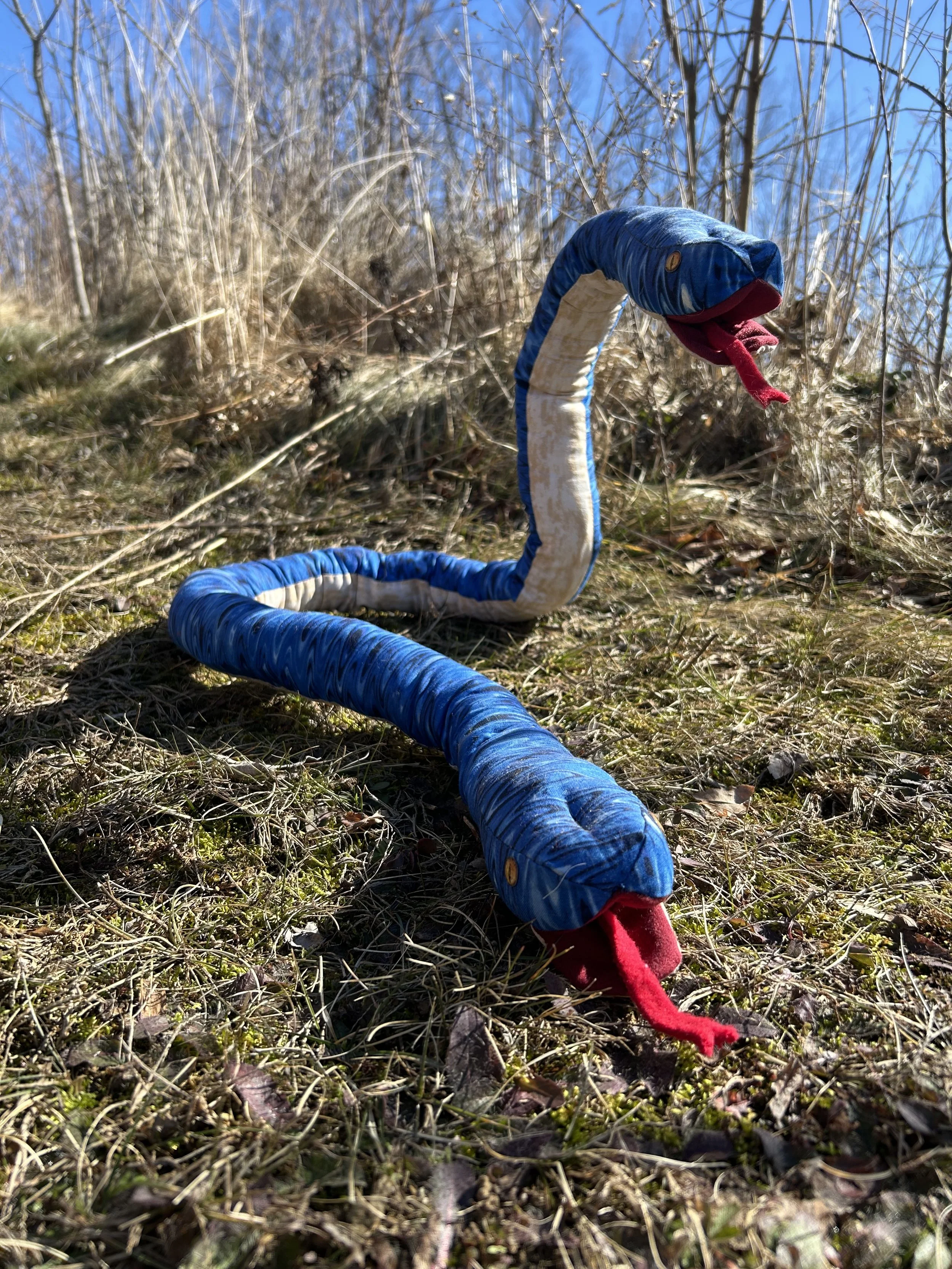
Cryptologic Name: Serpentes utrimque
Planar Origin: Materia
Habitat: Desert/Arid regions
Diet: Carnivorous
Appearance & Morphology
The amphisbaena is a serpentine creature with a head on both ends of its long, slender body. It appears that each head can think independently but their nervous system functions seamlessly so it is a much more coordinated creature than some others with multiple heads. The amphisbaena has a shared circulatory and digestive system as well, so food eaten by either head ends up in the same stomach. The amphisbaena most closely resembles the viper family of snakes, possessing the same long, hollow fangs which deliver venom to both prey and predators. Adult amphisbaenae can grow to a total length of 24 - 40in (60 - 100cm).
Behavior & Magical Abilities
With the two heads of the amphisbaena working in congruously, this creatures can slither in either direction and change directions instantaneously. Being able to look in multiple directions simultaneously and quickly change its direction of movement makes it an effective hunter of the small animals that it eats, as well as helping it avoid predators.
The amphisbaena is associated with life and death, because it has both a deadly bite and healing scales. Amphisbaena venom causes weakness and eventual death; drinking a solution of coriander is an effective antidote, as well as more traditional antidotes derived from the snake’s venom itself. On the other hand, this creature’s ventral scales (the scales on its belly) conduct healing energy into things they touch, causing wounds to heal more quickly and pathogens to become inert. Their scales retain some of this power even after shed or when the serpent dies, but they are significantly less potent than on a living amphisbaena.
Field Notes
Amphisbanae have traditionally been used in a variety of folk remedies, particularly surrounding healthy/safe childbirth.
OOC Corner
The amphisbaena originated in Greco-Roman mythology and appeared in medieval bestiaries.