Contact Us

Questions? Comments? Concerns? Suggestions? Submissions? Shout-outs?

Whatever you want to tell us here at Mikey Does Cosplay, we're always happy to hear your thoughts and feedback!


123 Street Avenue, City Town, 99999

(123) 555-6789

email@address.com


You can set your address, phone number, email and site description in the settings tab.
Link to read me page with more information.

Cryptobiology

Filtering by Tag: xiuhcoatl

Coatl

Michael MacWolff
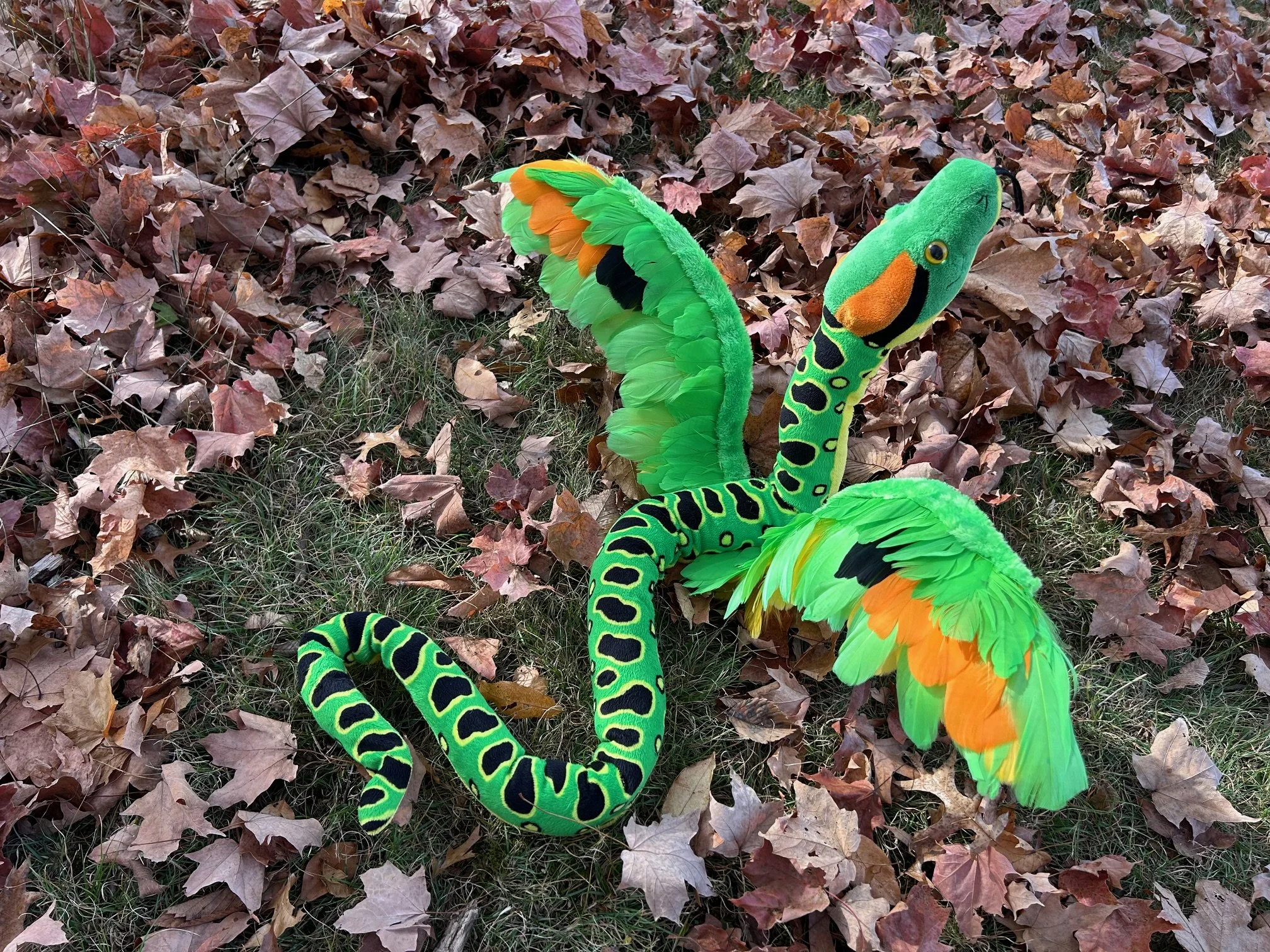
Cryptologic Name: Fterophidia coatl
Planar Origin
: Ilhuicatl-Teotlatlauhco
Habitat: Rainforest
Diet: Carnivorous

Appearance & Morphology
Coameh are large serpents with feathered wings. They have bright colors and patterns across their scaled backs and coordinating colors on their wings. Their scales and feathers both naturally glow and the coatl can control the brightness at will. Coameh grow to around 6.5m (21 ft.) in length with a wingspan of 4.5m (15 ft.). They are incredibly long-lived creatures, living an average of about 1500 years, reaching maturity around 375 years.

Magical Abilities and Behavior
These creatures are incredibly intelligent and can learn and use interspecies vernaculars telepathically (their physiology does not allow them to form and speak words aloud). It usually takes between 100 – 150 years to develop this telepathic speech with other species but they can understand these languages much more quickly than they can speak them when they are regularly spoken to. They can also freely communicate with their own kind from a much earlier age. Along with this intelligence comes a great enthusiasm for learning in most coameh, as well as a talent for magic. These creatures learn and perform magic from a variety of backgrounds, much like humans and other sentient beings with the capacity for magic. In many cases coameh will create their own spells to suit their needs. Most are generous with their knowledge and will share spells of their creation or otherwise within their breadth of knowledge with those they deem worthy.

The coatl’s bite is highly venomous, causing nearly instant paralysis and loss of consciousness in its victims. The venom is not deadly to most creatures, though it can kill demons and other creatures of demonic origins. Interestingly, this has been used as a method of exorcism as it will dispel demonic presence without permanently harming the host.

Field Notes

  • Though they are capable predators, many coameh discover the joys of cuisine as they age and they often see it as its own unique form of knowledge. Preparing a dish the coatl has not previously tasted can make for an excellent offering for those who wish to gain knowledge from them.

OOC Corner

“Coatl” comes from the Nahuatl language and translates to “snake” or “serpent.” I used the plural “coameh” to reflect the name’s Nahuatl origins (though I am not overly familiar with the language so if someone comes across this who is and wants to correct my grammar, I will gladly make changes). Feathered serpents originate in Mesoamerican mythology, and mine resembles many of their pop culture representations from D&D/Pathfinder/Warhammer/etc. While the inspiration for this creature is rooted in Mesoamerican mythology, I am not an expert in that field and the representation and characteristics described here are fictitious, to learn about the actual mythology that inspired this creature, I suggest following thestorytimeguy on Instagram.

Xiuhcoatl

Michael MacWolff

Cryptologic Name: Fidicephalos xiuhcoatl
Planar Origin
: Ilhuicatl-Teotlatlauhco
Habitat: Tropical climate, primarily jungle habitat
Diet: Carnivorous

Appearance & Morphology
Xiuhcoatls are one of many creatures in the Ophidiaves family, which display features of both snakes and birds. These particular creatures have long, serpentine bodies covered in small, colorful feathers and plain snake scales along their bellies. A bright ruff of larger feathers extends from the base of the creature’s neck, and can be raised like a frill when the xiuhcoatl is displaying. They also have a spiked, colorful ridge on their snout which matches in height the length of its head. From the tip of the tail protrudes a bony structure resembling a club which comes to a sharp point. The xiuhcoatl hatches at a length of 50-70cm and can reach lengths of up to 10m in length when fully grown, though it takes decades for these creatures to reach such a size.

Magical Abilities and Behavior
Like many nonmagical snakes, the xiuhcoatl is an ambush predator, meaning it usually waits until prey wanders within strike range before seizing it in its coils. Their large shout ridge can shift in color and even produce flashes of light, which they use in a similar fashion to anglerfish, creating dazzling displays to entice prey to into their waiting jaws. This display has an explicitly magical mesmerizing effect, so it is important to take proper precautions when observing these creatures. Study has shown that the magic only takes effect when the observer can perceive both the colors and pattern of the flashing lights, so people who are colorblind have a natural immunity to their effects, as well as other creatures who perceive light differently. As a full grown adult, xiuhcoatls will often prey upon smaller species of dragons, as their mesmeric display seems to be particularly effective on draconic creatures. In addition, their body feathers having a natural flame-retardant quality which protects them from the dragon’s fiery breath.

Aside from their use in luring prey, xiuhcoatls will also use these colorful displays to attract mates and to defend territory. The mating display involves an intricate interplay between males and females, while the defensive display is similar and is always accompanied by a raising of the feathered frill on the creature’s neck. Territorial disputes can often lead to fierce fights between these creatures; the xiuhcoatl will use its bony tail club to lash out, often attempting to damage the nose ridge of the adversary and disrupt its ability to properly execute its mesmerizing display. Individuals who take extensive damage to their snouts have a much harder time capturing prey than their intact counterparts.

Field Notes

  • While I don’t wish to downplay the danger these creatures pose to humans, I do find the young of these creatures to be quite charming and mostly harmless so long as they’re under about 2m in length. It takes time for the creatures to master their mesmerizing patterns, and while they do have sharp teeth and reasonably strong jaws, these are not venomous creatures.


OOC Corner

Xiuhcoatl comes from Aztec mythology. I admittedly need to do more research into this one’s origins.