Contact Us

Questions? Comments? Concerns? Suggestions? Submissions? Shout-outs?

Whatever you want to tell us here at Mikey Does Cosplay, we're always happy to hear your thoughts and feedback!


123 Street Avenue, City Town, 99999

(123) 555-6789

email@address.com


You can set your address, phone number, email and site description in the settings tab.
Link to read me page with more information.

Cryptobiology

Peryton

Michael MacWolff

peryton 4.jpeg

Cryptologic Name: C. cervidaves
Planar Origin
: Materia
Habitat: Temperate forests
Diet: Carnivorous, preying on a variety of animals, including humans

Appearance & Morphology
The peryton is a large half-cervine, half-avian creature with the head, forelegs and torso of a deer and the hindquarters, wings, and tail of a large bird. Despite having a head normally seen on an herbivore, these creatures are voracious predators and have long, razor-sharp fangs in their otherwise unassuming mouths. All perytons have antlers regardless of sex, much like reindeer, and will use them to gore larger prey.

Behavior & Magical Abilities
Perytons are very unusual creatures; they cast a humanoid shadow despite their shape, but their shadow will return to “normal” by eating the heart of a human being. The intrinsic magic in this is not remotely understood and, given the ethical implications, this is a difficult subject to research. What we do know, however, is that perytons can only reproduce when their shadows have returned to their own shape. Young peryton are cared for by their mothers; unlike nonmagical deer, fawns do not drink milk, but rather will lap blood from the doe’s kills while she consumes the majority of the meat.

Field Notes

  • Despite being hybrid creatures that could feasibly fall under the griff umbrella, perytons are a naturally-occurring species. While it is possible for alchemists to create a griff that resembles the peryton, such a creature is unlikely to be a carnivore, given the arrangement of features. While I am not familiar with any alchemists who have created a creature of this type, the hippalectryon (horse front and rooster rear) is a similar enough creation to draw some inferences.


OOC Corner
The peryton is a creature described in the
Book of Imaginary Beings by Jorge Luis Borges.

Occamy

Michael MacWolff

occamy 4.jpeg

Cryptologic Name: Poulicephalos badhatana
Planar Origin
: Materia
Habitat: Jungle
Diet: Carnivorous

Appearance & Morphology
Occamys are long, serpentine creatures with a mix of traits from both snakes and birds. The occamy’s head mostly bird, with a strong beak and bluish-purple feathers and it has golden eyes with slitted pupils, resembling a snake’s. The feather’s transition to scales down the creature’s neck, and back to feathers at the tip of its tail which ends in a colorful tuft. They also possess powerful wings which allow them to soar quite adeptly.

Behavior & Magical Abilities
The occamy’s most notable magical ability is choranaptyxis, meaning it can grow or shrink in size in order to fit its available space. It is unclear if this ability has a strict limit; we rarely see occamies grow larger than 5m in length or shrink to smaller than 15cm, but because we don’t entirely understand the mechanism of this magic we can only speculate as to whether there are limits to the creature’s range of sizes.

Occamies are carnivorous and quite dangerous; while they eat mostly insects, rodents, and small birds, their ability to grow in size means that they can easily injure or kill an unprepared mage if one happens upon them. What’s more, they are fiercely territorial and protective of their nests, as well as having a strong sense of smell, so nesting sites should be avoided.

Field Notes

  • Cryptozoologists have observed that occamies never expand past the boundaries of their immediate environment when in an enclosed space; for example, if an occamy slithered into a shoebox, it wouldn’t expand in size to break/be free of the shoebox. There are two possibly explanations for this, one being behavioral and one being magical. It is possible, since we still don’t fully understand how these creatures’ magic functions, that this is a limit on the magic itself, meaning they are incapable of growing beyond the boundaries of an enclosed space. Alternatively, the behavioral possibility (i.e. they simply don’t do this, even though they are able to) may be explained in terms of preventing injury to themselves. For example, if an occamy was contained in a metal box and expanded, it may cause serious injury to the occamy before the box broke (assuming it did ultimately break).

  • Occamy eggs are widely sought-after because their shells have an outer layer of pure silver.


OOC Corner
The occamy comes from the works of J.K. Rowling, particularly Fantastic Beasts and Where to Find Them.

Like I said in my entry on the augurey: I do not support her or her views in any way. I create creatures from a variety of sources and unfortunately the creators of some of those sources turned out to be assholes.

Hollowfolk

Michael MacWolff

husk warrior 1.JPG

Cryptologic Name: Koiloforma oplomistis
Planar Origin
: Hallownest
Habitat: Subterranean
Diet: Manavore

Appearance & Morphology
Hollowfolk, also referred to as "husks,” “husk warriors,” or “hollow knights” are a small, semi-corporeal race of creatures. Their bodies consist of shadowy energy which usually takes on a vaguely humanoid shape, though the forms their bodies take on are widely varied. Their heads are made from a bone-like material and also vary widely in shape, though all seem to have a single pair of blank eye holes.

Behavior & Magical Abilities
Hollowfolk form vast subterranean kingdoms, excavating elaborate tunnels and caverns in which they build cities beneath the surface of the soil. These beings can excrete a substance which can be mixed with soil to harden the interior of their caverns and provide structural stability within their underground homes.
Hollowfolk possess some rather unique magic for sustaining themselves; as semi-corporeal creatures comprised primarily of energy, they do not eat in the way we would normally think of the word. Instead, they forge tools and weapons imbued with a special type of magic which allows them to absorb mana from other living things (primarily animals, though they can do so with any living macroorganism including plants and fungi) and transfer it to themselves or other hollowfolk (as such we can essentially conceptualize them as omnivores, though… well the distinction is technical enough you can think about it however makes most sense for you). The details are a closely guarded secret among these elusive beings and while we, as humans, can communicate with them, they have not shared any of the specifics about how these tools function. We do know, however, that it requires special skills to forge them and hollowfolk with the necessary talent to become smiths are highly revered within their society.

Field Notes

  • A fascinating aspect of hollowfolk culture is their utilization of a variety of arthropod species (insects, crustaceans, arachnids, etc.) for a wide array of purposes within their society, many of which mirror human society’s utilization of mammalian species. For example, stag beetles and other larger coleopterans often used for pulling vehicles and agricultural jobs in a manner similar to horses or oxen. Hollowfolk seem to have the ability to establish some sort of telepathic link to insect species through a bonding ritual, allowing them to train these animals in a way that is not generally believed possible otherwise. Unsurprisingly, this ritual is also a closely-guarded secret that we know little about.

  • From my discussions with the few members of their species I’ve had the pleasure of meeting I’ve learned that on their home plane they have even greater variety of arthropod species than we do here on Earth (a surprising statistic as arthropod species account for more than half of all extant animal species), many of which are independently sentient without the use of the hollowfolk’s magic.


OOC Corner
Hollowfolk are based on the residents of Hallownest in the video game
Hollow Knight.

Augurey

Michael MacWolff

Cryptologic Name: Kairouli liveros
Planar Origin
: Veneficus
Habitat: Temperate marshlands
Diet: Carnivorous, feeding primarily on insects and faeries

Appearance & Morphology
The augurey, sometimes referred to as the “Irish phoenix,” is a moderately large bird resembling a vulture. Its long neck and head are mostly bare save for a ruff of plumage around the base of the skull and a bright crest stemming from the same area atop its head. Mostly grey-brown in color, these birds have shocks of bright green feathers in their crest, tail, and wings.

Behavior & Magical Abilities
Augureys are known to sing a melancholic song, and for a long period of time many believed this call to be prophetic of one’s death. In the mid 1700’s Rumors spread of people suffering heart attacks walking the marshlands in which these birds can be found, and these deaths became attributed to the birds’ dreary ballads. It wasn’t until many decades later, when cryptozoology became more widely studied in the magical community, that we discovered the true nature of these birds’ magical abilities. It is true that they have minor prophetic powers, however they do not predict death, but rather the coming onset of precipitation. As such, these birds became wildly popular among mage families as weather predictors, however during the rainier months their unpleasant dirges can be rather taxing to hear with such frequency.

These birds are rather reclusive, building teardrop-shaped nests out of thorns and bramble and remaining hidden within them for the bulk of the day, only emerging in the twilight hours to hunt for meals.

Aside from their predictive abilities, they also have another unusual property in their plumage. Augurey feathers contain a chemical compound that resists ink, and thus are useless as writing quills.

Field Notes

  • It’s nickname, “Irish phoenix,” is not particularly meaningful from a cryptozoological standpoint. These creatures are not native to Ireland (like most magical creatures, they are extraplanar beings, though to be fair there is a sizable population there) and primarily are associated with Ireland because of their green coloration. Similarly, they are not closely related to phoenixes, but are simply magical birds of a comparable size. Informal names are often thus, much as how “jellyfish” are not actually fish. This is probably unimportant to most of you but I’m a scientist and this is my field guide so you signed up to hear my inane complaints about mage society’s unscientific way of talking about things.

  • Uric the Oddball [a wildly eccentric collector of magical species] is known to have slept in a room containing no fewer than fifty pet augureys. During one particularly wet winter, Uric became convinced by the moaning of his augureys that he had died and was now a ghost. His subsequent attempts to walk through the walls of his house resulted in what his biographer Radolphus Pittiman describes as a “concussion of ten days’ duration.’
    (Scamander, Newton. Fantastic Beasts and Where to Find Them. Obscurus Books, 1927.)


OOC Corner
The augurey comes from the works of J.K. Rowling, particularly Fantastic Beasts and Where to Find Them.

Let me be clear: she has used her vast platform to tear down trans people, and we don’t stand for that shit in this house. My inclusion of this creature in my field guide is a relic of my enjoyment of her works in my youth and does not indicate my current support of her or her bullshit.

Vigorwasp

Michael MacWolff

vigorwasp 5.JPG

Cryptologic Name: R. renovespa
Planar Origin
: Repens
Habitat: Jungle
Diet: Herbivorous

Appearance & Morphology
The vigorwasp is a large, fuzzy wasp species with bright gold and black coloring on its legs and abdomen. Like other hymenopterid species, there are morphological differences between wasps with different roles within their hive, which are divided into three categories, known as castes. The queen is the only egg-laying individual of the hive, and is significantly larger than the rest, sporting a long abdomen with several openings out of which her eggs are laid. Worker drones are much smaller and are the only individuals which possess stingers for protecting the hive. Lastly, the nurses are larger in size than the drones and can often be seen carrying a large sac of bright green liquid.

Behavior & Magical Abilities
Of the three categories, the vigorwasp nurses are the most sought-after and arguably most important individuals in their social structure, as they provide food for the entire hive. They produce a bright green liquid commonly referred to as “vitality nectar,” which is secreted into a bubble on the underside of the wasp. Aside from being the sole food source for the rest of the hive (the maids feed primarily on nectar and tree sap for their own nourishment), this liquid has potent healing properties. On its own it can be applied to wounds to heal damaged muscle and skin, or brewed into more potent healing potions and salves with a variety of effects.

Field Notes

  • Vigorwasps are the only species known to have three distinct casts, all other eusocial species of bees and wasps only have two: queens and drones. The “nurse” caste specific to this species was named thus because of the healing properties of their vitality nectar.

  • Because of the importance of the vitality nectar in sustaining the hive, it can only be gathered in small amounts without risking the health of the hive. This is not dissimilar from beekeepers leaving a portion of the honey for their bees’ consumption.


OOC Corner
The vigorwasp is a type of endemic creature in the video game Monster Hunter World.

Devil's Eye Moth

Michael MacWolff

devilseyemoth4.jpeg

Cryptologic Name: Capuridae Diaboculus
Planar Origin
: Materia
Habitat: Forested mountainsides
Diet: Herbivore; primary diet is tree sap

Appearance & Morphology
The devil’s eye moth is a large species of magical moth which is primarily brown in coloration. Both its fore and hindwings have bands of blue-violet color across the width of the wing and golden yellow along the outer margins. Their most recognizable trait is the presence of large, red eye spots in the center of their hindwings, for which they earned their name.

Magical Abilities & Behavior
This moth’s active magical abilities center around these large red eye spots on their wings, which glow ominously when revealed and will cause a temporary state of stasis in any living creature which sees them. This stasis essentially renders the creature frozen in place for approximately 4-5 minutes before regaining faculty. This is often compared to the eyes of petrifying species such as the gorgon, basilisk, or cockatrice in that it requires the creature to see the source of the magical power (the eye spots of this moth or the actual eyes of the other species mentioned). As such appropriate countermeasures can be used when dealing with these creatures such as enchanted ocular devices and the like.

Like many of their nonmagical counterparts, these moths rest with their wings folded back, obscuring the red eye spots and making them fairly well-camouflaged on the trunks of the large trees they will land on to drink the sap and making their eye spots inactive on any random forest creatures that happen to be passing by. Being moths, however, they are rather tasty prey for many creatures and will generally use their power as a defense mechanism against such predators, allowing them to escape. Unfortunately this is not a particularly effective strategy against one of their primary predators, bats, as they generally use echolocation rather than vision to locate their prey.

devilseyemoth2.jpeg
devilseyemoth3.jpeg

Field Notes

  • While discussing the magical state of stasis the devil’s eye moth produces in creatures who see its glowing red eye spots, I noted that it is often compared to the petrifying gaze of several other species. There are a few key differences, however, in how this power works which should be noted. First and foremost, gorgon and basilisk eyes retain their magical qualities even if the creature is no longer alive, while cockatrice eyes and the spots on the devil’s eye moth require mana to actively be supplied in order to achieve the effect, which means that if the creature is no longer alive, the power ceases to work. As such you cannot as easily petrify/stun creatures in the same manner as Perseus, by simply lopping the relevant part off and waving it at your enemies. It is possible to channel mana through the wings to recreate the moth’s power, but it takes a great deal of research and practice to be able to manipulate the mana in a specific and subtle enough way to successfully achieve this.

  • I should also note, though if you’ve made it this far you’ve probably figured it out already, but the moth’s power also doesn’t function through photographs, so you don’t need to worry about becoming frozen by seeing pictures of these creatures, even if they are displaying their eye spots.


OOC Corner
The devil’s eye moth is a creation of my own. This came about as I was doing a lot of embroidery of different real-life moths and wanted to create a magical one for my collection. Thus this beauty was born!

Thunderbird

Michael MacWolff

Thunderbird 3.jpeg

Cryptologic Name: Fulgaquila wakinyan
Planar Origin
: Materia
Habitat: Arid regions
Diet: Carnivorous

Appearance & Morphology
Thunderbirds are giant raptors resembling golden-feathered eagles. These birds have three pairs of wings and two long, bare tails that end in feathery tufts. Thunderbirds’ sharp, hooked beaks; powerful talons; and powerful wings make them incredibly fierce hunters. These enormous creatures can pick up fully grown bison to take back to their nests to feed at their leisure.

Behavior & Magical Abilities
Thunderbirds are rather aptly named, as they create thunderclaps when they beat all 3 pairs of wings in tandem. They don’t always use all three sets when they fly, as it’s rather difficult to take prey by surprise when they’re constantly making loud noises as they fly. When these magnificent birds beat their wings repeatedly, they will summon severe thunderstorms, particularly when multiple individuals are flying together. They can direct lightning generated in the clouds, though it takes a good deal of concentration for them to control it with any kind of accuracy.

Thunderbirds are generally solitary creatures, and are fiercely territorial. When territory disputes occur, the birds can call up dangerously powerful storms as they vie for territory. Aside from territorial disputes, these birds usually only come together to mate and care for their young; usually only having broods of 1-2 at a time. Both parents share responsibility of caring for the eggs and hatchings, usually alternating between guarding the nest and hunting. Thunderbird chicks usually fledge about 14-16 weeks after hatching, and are taught to fly and hunt by their mother, at which time the father generally leaves to reclaim his former territory.

Field Notes

  • While thunderbirds do cause storms, this is not meant to suggest that all thunderstorms are a result of thunderbirds’ magic; like any weather phenomenon, most instances occur completely naturally as a result of atmospheric conditions.

  • Thunderbird quills are potent magical materials, often used in magical rituals or as wand cores, though wands with thunderbird feather cores tend to be temperamental unless used by a highly skilled mage.


OOC Corner

The thunderbird originates in North American indigenous cultures. It appears in the traditions of many cultures across North America. I recommend reading Brave Wolf and the Thunderbird by Joe Medicine Crow if you’d like a story involving the thunderbird.

Caravan Snail

Michael MacWolff

caravan snail 1.jpeg

Cryptologic Name: Gymnosalidae akolomagia
Planar Origin
: Fae
Habitat: Temperate forests & fields
Diet: Herbivorous

Appearance & Morphology
Caravan snails are fae creatures that resemble land slugs with light undersides and brightly-colored patterns on their backs. These creatures usually grow to between 10-15cm in length and have a pair of retractable tentacles on their heads which are sensitive to ambient mana.

Behavior & Magical Abilities
These unusual fae creatures are able to sense mana in their immediate surroundings, and will follow the flow of energy along natural leylines. This natural tendency to migrate along these natural routes of mana flow has led them to be used as beasts of burden for tiny, nomadic race of faerie know as vagare. Mana from leylines is used in a variety of ways in their magical rituals, and as such they have come to rely on these snails to locate and follow their flow. The vagare will attach riding platforms to these creatures, on top of which they will build their homes. This practice is where caravan snails got their common name, as the vagare will form large communities together atop a herd of them, who will migtare over time along a leyline’s current. While the vagare will attach bridles to their snail’s head such that they can actively direct the creature’s movement, they don’t often use them, allowing the snail to move about of its own volition.

Field Notes

  • Because of their ability to sense ambient mana and innate tendencies to follow mana currents, caravan snails can be used as indicator species for mages to locate mana currents, though this can be a time-consuming process as they are slugs and therefore move at a more leisurely pace than most mages are willing to deal with for such a task when there are more expedient methods.

  • While they are known as “caravan snails,” this is somewhat of a misnomer, though that is not unusual in the common names of animals, magical or otherwise. I say this because caravan snails do not naturally have shells and therefore their anatomy much more resembles slugs. It’s likely that they were named this way because of the vagare homes that are so commonly seen on them, which do seem to mirror a snail’s shell in that we consider it to be the snail’s “home,” and a literal house is build upon them. This distinction is probably unnecessary but seemed worth mentioning.


OOC Corner

Caracan snails are another of my own creations. The vagare are also a creation of my own, with no explicit analogue in European folklore which most fae lore originates.

Sky Bison

Michael MacWolff

sky bison 1.jpeg

Cryptologic Name: Exipodia petovonasos
Planar Origin
: Ava
Habitat: Mountainous regions
Diet: Herbivorous

Appearance & Morphology
Sky bison are large bovine creatures somewhat resembling their nonmagical namesakes, the most similar morphological feature being their broad heads and curved horns. Sky bison have six strong legs, each with three toes, broad tails, and thick fur covering their bodies. Most sky bison are primarily white in color, with brown accents to their fur, though some variations have been observed. As with most herbivores, their wide jaws have flat teeth for grinding vegetation.

Behavior & Magical Abilities
Sky bison get their name from their ability to fly. These creatures can manipulate their own body mass, as well as control air currents around them with a significant degree of precision, making them quite agile in the air despite their physical bulk.
Sky bison are generally quite docile and content to ignore and be ignored by most other animals. These normally gentle giants are, however, fiercely protective of their young and their sheer size and mass make them quite dangerous when they have young calves to take care of. They will often use their ability to control air currents as a defensive weapon when confronted with predators.

Field Notes

  • These fascinating creatures do possess a high level of intelligence and can be domesticated given proper time and training. On their home plane, a nation of people with a similar ability to control air raise these creatures as lifelong companions.

  • This is one of many examples of large, entirely non-aerodynamic animals being able to soar the skies magically. I would be fascinated to look into how so many such creatures developed this ability,


OOC Corner

Sky bison come from the Nickelodeon animated series Avatar: The Last Airbender, which you should all watch cause it’s amazing. Not the movie though, we pretend that doesn’t exist.

Blupee

Michael MacWolff

blupee 1.jpeg

Cryptologic Name: Blagos chrimouneli
Planar Origin
: Hylaea
Habitat: Forested areas, often at high elevation
Diet: Herbivorous

Appearance & Morphology
Blupees are small, furry creatures somewhat resembling rabbits. They have glowing blue fur across most of their bodies, with white paws and bobtail. Their faces are a lighter blue and have large, yellow-orange eyes and unusual branched ears.

Behavior & Magical Abilities
These odd creatures have a few unique powers to speak of, and are primarily centered around their own survival. First, these creatures can generate a powerful barrier around their body which shields them from physical harm. Additionally, they can teleport moderate distances, however this ability seems to have a delayed activation, as often when these creatures are attacked they will run a short distance before teleporting away.

Blupees are known to collect and horde gemstones, most commonly collecting a variety of stones known as rupees which are used as a form of currency on the creature’s native plane. It is ill-understood how or where these creatures keep these gemstones as they’re collecting them, as blupees don’t possess pouches like nifflers. However stashes of these gems have been found in blupee burrows, and when frightened they will often drop a scattering of gems on the ground as they begin to run from whatever spooked them. It is believed that they may have access to some sort of pocket dimension where they can stash these gems before delivering them to their burrows but nothing conclusive has yet been found.

Field Notes

  • Blupees are believed to have gotten their name from the rupees which they collect and their blue coloration. It seems people on other planes are often as straightforward as Terran humans with their naming conventions.

  • There are many theories about the origins of these unusual creatures and their powers. Given their similarities in appearance to rabbits which are known to exist in the history of their native realm but no longer in the present, Blupees may have been evolved from Hylaean rabbits prior to their extinction. Their flighty nature, magical barrier, and ability to disappear may also be a result of evolution which allowed them to avoid being hunted to extinction like their predecessors. Their habit of dropping Rupees may also be a defense mechanism to distract hunters. Furthermore, given their otherworldly appearance Blupees may be a spiritual manifestation of the wild rabbits that once inhabited Hyrule which would explain their glowing bodies and abilities. [Information from Zeldapedia, a collection of information on the Hylaean plane]


OOC Corner

The Blupee is a creature from the video game series The Legend of Zelda. As far as I’m aware, they first appeared in Breath of the Wild.

A Primer on Planar Theory and the Nature of the Soul

Michael MacWolff

Today’s topic, or really series of interrelated topics, are something that I am quite frankly underqualified to be discussing. So why am I including them in these notes? Well, because they do relate to the field of cryptozoology and are quite fascinating on the whole. And it will help those of you who are reading through my field notes, whether you are a mage or not, to understand a little more about the magical world (which presumably you have some interest in, or why would you be reading any of my writing in the first place?)

WHAT IS THE SOUL?

The nature of a creature’s soul is fairly complicated to explain in layman’s terms so I’m going to start with a more technical definition so as to put it as concisely as possible.
The soul is the etherial seat of the consciousness.

Ok you know what I started with the wrong topic, there’s another theory that needs to be discussed first for that sentence to make any kind of sense. [come to think of it, I’m probably going to have to jump between my three topics a fair bit since they’re all interrelated and understanding any of them is best served by understanding all of them to some extent]

PLANAR THEORY

The planes of existence are another fundamental theory required to understand the nature of the soul, magic, and the universe on the whole, thus we’ll start there. People call them by a variety of different names, “worlds,” “planes,” “realities,” "dimensions,” etc. but all refer to the same concept, that there are distinct universes existing alongside one another. Our multiverse contains more planes than I can possibly name, and more than we are, or likely ever will be, aware of in the history of our species; each plane has a distinct set of laws [by that I mean natural laws, not societal laws. For example: gravity, conservation of mass, thermodynamics, etc. Many planes share a lot of these laws, but honestly the material plane is rather mundane compared to some others we are familiar with, as many planes… you know what that’s not overly relevant to the current discussion, so allow me to attempt to steer myself back on course here]. The relevant planes today’s topic are two closely related ones: the material plane (the plane on which we live), and the ethereal plane, which exists adjacent our own and interacts with it in ways that may or may not be perceivable to us.

Note: When reading through my field guide entries, one of the first things included on each creature’s page is their planar origin. This refers to the plane that creature originated on. Eventually we may discuss planar travel and why we have creatures here that come from such a vast variety of planes on our own, but that is a topic for another day.

THE VEIL

The veil is another concept that is fairly important to understanding all of this. The veil is a barrier that exists between the material and ethereal planes. It is perhaps more precise to call it it a membrane because certain things can pass through it, which we will talk about later. [the phrase “lifting the veil,” or “drawing back the veil” is actually an ancient magus saying that meant to observe the secrets of magic, though nonmagical folk generally attribute it to the act of removing a cloth/shroud/curtain from something to reveal what is behind it, thus “exposing a secret,” but the original meaning was somewhat more literal]

SO… WHAT IS THE SOUL?

When I say that the soul is the ethereal seat of the consciousness, what I mean is that our consciousness does not exist purely on the material plane, it also exists on the ethereal plane. You can think of the soul as an organ that houses our consciousness and exists in between the material and ethereal planes (though it is generally thought to be rooted in the ethereal plane). Another potential way to think of it is a bridge between our material and ethereal selves, though the soul can also be said to be our ethereal self, but this is somewhat misleading as the soul is usually existing between the planes.

If you’re still not entirely clear on things (which this is a complicated topic so that would be entirely understandable), take a look at this crudely-drawn diagram and see if the visual helps make things any clearer.

I realize now that I mislabeled the material plane as “physical plane” please forgive this oversight and my lack of motivation to scribble another picture with the proper label.

I realize now that I mislabeled the material plane as “physical plane” please forgive this oversight and my lack of motivation to scribble another picture with the proper label.

I want to remind all of you that I am a cryptozoologist and not a scholar of planar theory so I am not the best qualified person to be explaining all of this, but I hope that at least gives you a very basic idea of what your soul is. If you’d like to read further I can recommend a number of books by accomplished scholars on these topics.

Note: I wanted to make a comment on terminology with respect to “soul” and “spirit.” You’ve likely heard the two words used interchangeably, which in most contexts you’re likely to have heard is not incorrect, but imprecise. Strictly speaking the word “spirit” applies to things rooted in the ethereal plane that interact with the material plane [a broader definition is used when considering species from outside our known biplane (referring to the material and ethereal plane) but that is not particularly relevant to this discussion, beyond the fact that spirits from outside these bounds have similar properties to those we classify as such here]. In contrast, a s”soul” is a more specific term referring to the ethereal seat of consciousness for beings native to the material plane. To demonstrate the difference, there are beings that are native to the ethereal plane which do interact with the material plane, and as such qualify as spirits without being souls. This is hardly an essential distinction in our topics of discussion today but should give some context for when I use those terms in the future. I will endeavor to use them appropriately.

Manaweaver

Michael MacWolff

fae spider 2.jpeg

Cryptologic Name: Mageistos s.
Planar Origin
: Fae
Habitat: Temperate forests
Diet: Manavore

Appearance & Morphology
Manaweavers are a genus of fae creatures that resemble brilliantly-colored spiders with glowing abdomens. This genus varies greatly in both size and appearance between its many species, with individuals small enough to barely be visible to the naked eye, to giant creatures with legs over a meter long. While these creatures do look very similar to nonmagical spiders, they have a distinct morphological difference from them. Manaweavers have distinct head and thorax sections, rather than a single cephalothorax as nonmagical spiders do, meaning an individual can mover its head around while keeping the rest of its body still.

Magical Abilities
These unique arachniforms weave webs much like their nonmagical kin, but these webs have very special properties. Manaweaver webs consist of a special silk that exists as a part of the veil, meaning that it exists both on the material and ethereal plane simultaneously [for more info on planar theory, you can look at my primer here…. which I haven’t finished writing yet but I’ll link it once it’s posted]. As such, these webs cause ambient magical energy to condense and “stick” to them, so to speak, which the manaweaver will then consume. Each species feeds on a particular type of magical energy, and as such each web is woven into particular shapes and patterns which attract the desired type. This energy can be used in a variety of ways after it is consumed but is primarily used to sustain the creature’s life force.

Behavior
Because these creatures subsist on condensed mana and not physical sustenance, they are not predators like their nonmagical kin. However, because they absorb pure magical energy, they are prey for other fae creatures on their home planes, and can defend themselves using the magical energy they’ve absorbed in a variety of ways, depending on what type of mana they specialize in. For example M. mandigni, which consumes fire mana, will generally create small explosions in an attempt to scare away predators, or breathe fire on would-be attackers who get too close. Each variety of manaweaver has common tactics across a species, but we also see innovation among individuals, meaning they are highly intelligent creatures who can craft magic much like mages can.

Field Notes

  • The individual pictured above is from my own collection, and is an M. lumanducar, which traps and consumes mana associated with light and illusion magic. As such, components of this species are sometimes used in potions that produce mirages. Naturally their defense mechanisms revolve around distracting predators with illusions, though my particular manaweaver has a penchant for creating bright flashes of light that are temporarily blinding. While I’ve never startled him intentionally, it does happen every once in a while, and I’m hoping it doesn’t cause any long-term damage to my retinas.


OOC Corner

The manaweaver is a creature of my own creation. I wanted to craft an arachniform fae creatue and this is what I ended up with. Their magical abilities followed.

Alicanto

Michael MacWolff

Alicanto 1.jpeg

Cryptologic Name: Alchimiave aurum
Planar Origin
: Materia
Habitat: Arid regions
Diet: Carnivorous, eating mostly insects

Appearance & Morphology
The alicanto, commonly known as the “alchemy bird,” is a small songbird that is primarily golden in color, with dark patterns on its brow and belly and a white patch on its chin. These birds have long, streaming tails and a metallic shimmer to many of their feathers. The alicanto’s eyes glow silvery-white in low light.

Magical Abilities
These incredible birds live up to their common moniker as their excrement contains a powerful alchemical reagent that can turn sand into gold. This reagent works on sand in many different forms including sandstone and some other materials that are similar in chemical structure (the silica seems to be the most relevant ingredient but appears not to be the only necessary component)

Behavior
Like many creatures that make their homes in the desert, the alicanto is nocturnal, emerging at night to hunt for insects and returning to their homes before dawn. These birds are rather unique in that it only nests in sheltered caves. Because of this and the unique properties of the bird’s droppings, an alicanto’s cave will become gilded over time. This makes them incredibly valuable for anyone who can find them, but between the natural dangers of the desert as well as the wiles of the birds themselves, it is not an easy endeavor to claim an alicanto’s treasure.

Alicantos are cunning and mischievous creatures; they seem to have an understanding of the value of the gold they produce and as such are very protective of it. When they become aware that they are being followed, these cunning birds will often lead their pursuers over cliffs, into pits of quicksand, or sometimes into areas with dangerous predators. If you come across an alicanto and wish to find its lair, be very cautious that the bird doesn’t see you, or at the very least be vigilant in observing your surroundings.

Field Notes

  • There are two related species, A. argenti, known as the “silver alicanto,” and A. cuprum, the “copper alicanto.” Each of these birds has colored plumage corresponding to their respective metals (silver-grey for the silver alicanto and copper-green for the copper alicanto), and their excretions form the corresponding metal deposits.


OOC Corner
The alicanto is a creature from Chilean mythology. It is a creature described in
Jorge Luis Borges’s Book of Imaginary Beings.

Chocobo

Michael MacWolff

Chocobo 2.jpeg

Cryptologic Name: Chocobo chocobo
Planar Origin
: Crystalis
Habitat: Primarily meadowlands
Diet: Herbivorous

Appearance & Morphology
The chocobo is a large, flightless, brightly-plumed bird with long, powerful legs, a large head, and a broad, hooked beak. Unlike most birds, chocobos only have 3 toes on each foot, with two facing forward and one facing back. Their tail feathers stick up from their rear, similar to a chicken’s, and they develop a feathered crest on their heads in their adolescence. Chocobo chicks resemble baby chickens in shape and color, but their necks elongate as they age. Chocobos come in a variety of colors including yellow, red, blue, green, black, white, pink, and gold.

Magical Abilities
Chocobos have a variety of magical abilities that seem to be tied directly to their plumage color. Despite this, they are still recognized as a single species because the color morphs are not biologically separate, and can interbreed freely.

  • Yellow chocobos are the most common breed, and in so far as we are aware, do not posess any outward magical abilities.

  • Red chocobos are known to breath fire, but only after eating a particular vegetable known as krakka greens (native to Crystalis). Cryptozoologists have come to discover that red chocobos have glands in their throats which release an alchemical solution that, when combined with stomach gasses produced from digesting krakka greens, will ignite when exposed to the air. So I suppose it is more appropriate to say that red chocobos can belch fire after eating their favorite meal. Regardless, it makes for an effective defense mechanism.

  • Green chocobos are most at home in the mountains, as they are expert climbers, even outpacing the Ibex due to the magic in their talons that allows them to walk on any surface as though it were flat ground. This incredible magic even allows them to traverse overhangs or walk on flat ceilings. However, the extent of their magic only applies to their own body, meaning that you’ll still likely fall off a green chocobo you’re riding if it decides to take a stroll onto the ceiling, unless you’re holding on very tightly.

  • Blue chocobos, much like the green morphs, have a special magic in their talons which allows them to traverse special surfaces. In the case of blue chocobos, they can walk on the surface of water.

  • Black chocobos are known to move at incredible speeds, far beyond what any creature could achieve by nonmagical means. We believe that black chocobos can actually manipulate time within themselves, which is the root of this ability. Much like their green counterparts, this magic applies only to themselves, and riding a black chocobo when it’s using its abilities can be dangerous if not properly prepared.

  • White chocobos are known to have healing powers associated with their cries. When a white chocobo sings, it greatly speeds up the natural regeneration process in living creatures around it, meaning wounds will quickly heal.

  • Pink chocobos are similar to their white kin in that they possess restorative powers, however their magic is centered more around expelling toxins. This can be quite useful when dealing with highly venomous creatures, both magical and otherwise.

  • Gold chocobos are the rarest and most powerful variety of chocobo, possessing all of the natural magical abilities of the spectrum of their kin. As such, they are highly sought-after in their native realm.

Behavior
Wild chocobos form roaming flocks, much like herds of wild horses. There is some social structure to these flocks but no strict hierarchy. Chicks are raised primarily by their mothers, though flocks are generally very protective of any young, regardless of parentage.

Chocobos are highly intelligent animals and take well to training. Given their physical prowess and capacity to learn, chocobos are often used in a similar capacity to horses on their native plane as a mode of transportation, either being ridden or used to draw carts and other vehicles.

Field Notes

  • C. chocobo, referred to as the “common chocobo,” is not the only species of chocobo, but it is the most commonly seen amongst the disparate worlds on the plane of Crystalis. There are two other known species in the chocobo genus: C. rotunda is often called the “chubby chocobo” as it is much heftier than the common chocobo and C. voluns, the “sky chocobo,” which is the only species capable of light.


OOC Corner
Chocobos come from the Final Fantasy video game series, and are present in every title of the series. WARK!

Arcwhale

Michael MacWolff

Arcwhale 1.jpeg

Cryptologic Name: Falaptera s.
Planar Origin
: Mithyrea
Habitat: Upper atmosphere
Diet: Somnivore (see “magical abilities” below)

Appearance & Morphology
Arcwhales are, simply put, whales with pairs of feathered wings on their backs, extending out near their dorsal fins. There are a variety of arcwhale species, each resembling a species of their aquatic counterparts.

Magical Abilities
Arcwhales have a variety of magical abilities common across their different species. First, arcwhales naturally float in the air by magical means, meaning they are never earthbound even when they are born. These creatures seem to have an organ akin to a fish’s swim bladder, which allows them to control their altitude in the atmosphere. In addition to their floating, arcwhales causes water in the air around them to condense, meaning that they are always surrounded by a dense cloud.

Lastly, arcwhales are somnivores, or “dream eaters,” meaning they subsist on energy absorbed from the dreams of other living creatures. It is generally believed that nightmares are more potent (i.e. have greater energy potential), and as such are often siphoned off by the archwhales, over pleasant/peaceful dreams. As such, many consider these creatures to be naturally occurring dreamcatchers, which are generally crafted to produce the same effects.

Behavior
While arcwhales’ wings are not large or powerful enough to keep these massive creatures aloft, they do help propel the creatures forward as they float through the sky and their flippers and tails are used to help steer.

Because their food source is more widely available at night, arcwhales are generally considered to be nocturnal creatures. This is only partially accurate because arcwhales don’t sleep, though they are less active during the day, floating lazily in the upper atmosphere. In the evening, they will venture lower so they can more easily siphon dream energy from sleeping creatures, usually returning to greater altitudes by mid morning.

Field Notes

  • If you ever notice heavy fog in your neighborhood after dark, there is a good chance the arcwhales are about and you can expect good dreams, assuming you’re on a normal sleep schedule. This isn’t a guarantee, however, since fog does occur naturally under the right conditions.

  • While the true origins of most magical creatures are unknown, myth and legend surround many, including the arcwhale. It is said that the ancient whales envied the birds that soared the skies, and would dream of taking flight with their avian companions. No creature wished more for this than Rakhnam, King of the Whales, and each night he would absorb the dreams of his pod until one night his spirit grew wings of light and he soared up into the sky, never again to be bound by the watery seas.


OOC Corner
Flying whales are a common trope in fiction, with no clear root in a particular mythology. They have a variety of names across different media, I liked the name “arcwhale,” which comes from the video game Skies of Arcadia.

Korok

Michael MacWolff

IMG_1201 (1).JPG

Cryptologic Name: Silva facifolium
Planar Origin
: Hylia
Habitat: A variety of natural areas
Diet: Primarily photosynthetic, secondarily herbivorous

Appearance & Morphology
Koroks are small creatures with skin colored and textured much like tree bark. Their most distinctive feature is the leaf mask which they wear over their faces. Koroks cut small shapes and patterns into their masks so each one is unique, and often reveals something about the personality of the individual.

Magical Abilities
Koroks, like many creatures of advanced intelligence, have the capacity to learn magic, much like human mages do. Their preferred area of study tends to be illusion and nature-based magic, as they fit well with their own lifestyle and inherent magical abilities, but many also enjoy learning conjuring and elemental magic.

As far as their natural abilities, they can become invisible when touching any living plant. Secondly, they are able to sense the thoughts and feelings of trees. We generally have to take this ability at the koroks’ word, as humans have yet to develop any sort of magic which allows them to communicate with non-sentient plant life. Lastly, they have a special magical ritual that, when performed with a group of koroks, can cause a tree to produce seeds.

Behavior

While they have a range of personalities as diverse as humanity, many koroks tend to have a playful and inquisitive nature. They tend to enjoy finding patterns in the mundane and will often use their magic to create such patterns for others to find.

Koroks are born from the buds of deku trees, a unique and powerful type of tree. native to the plane of Hylia. They have a strong magical bond with their parent tree, though the nature of that bond is not entirely understood. It seems to be, at least in part, the source of their magic. Koroks are also known for their desire to explore, and many koroks go on journeys at some point in their lives to find unique places in their world and beyond. Often koroks will take some of the seeds from their parent tree on their journey and find special places to plant them. They are often drawn to places in nature with unique patterns, which often correspond to natural leylines of energy, and as such are both magically potent and aesthetically interesting. When others find these special places, if the korok is still hiding nearby, he might reveal himself and offer one of his tree’s seeds to the lucky person.

Field Notes

  • Koroks originated on the plane of Hylia, and the first koroks were born from the Great Deku Tree, a unique and powerful being venerated on that plane. Koroks now live on countless planes thanks in no small part to their wanderlust. It is somewhat unclear why most deku trees planted.

  • The ritual to cause trees to magically seed appears to be the only way that deku trees can reproduce, as they never produce flowers to reproduce sexually. It is also unclear why deku trees take on different characteristics when planted on planes outside of hylia. On their native plane, deku trees are sentient and can speak, but deku trees grown on our own plane are not.


OOC Corner
Koroks are a race of being from the Legend of Zelda game series. They first appear in the title The Legend of Zelda: The Wind Waker.

Phoenix

Michael MacWolff

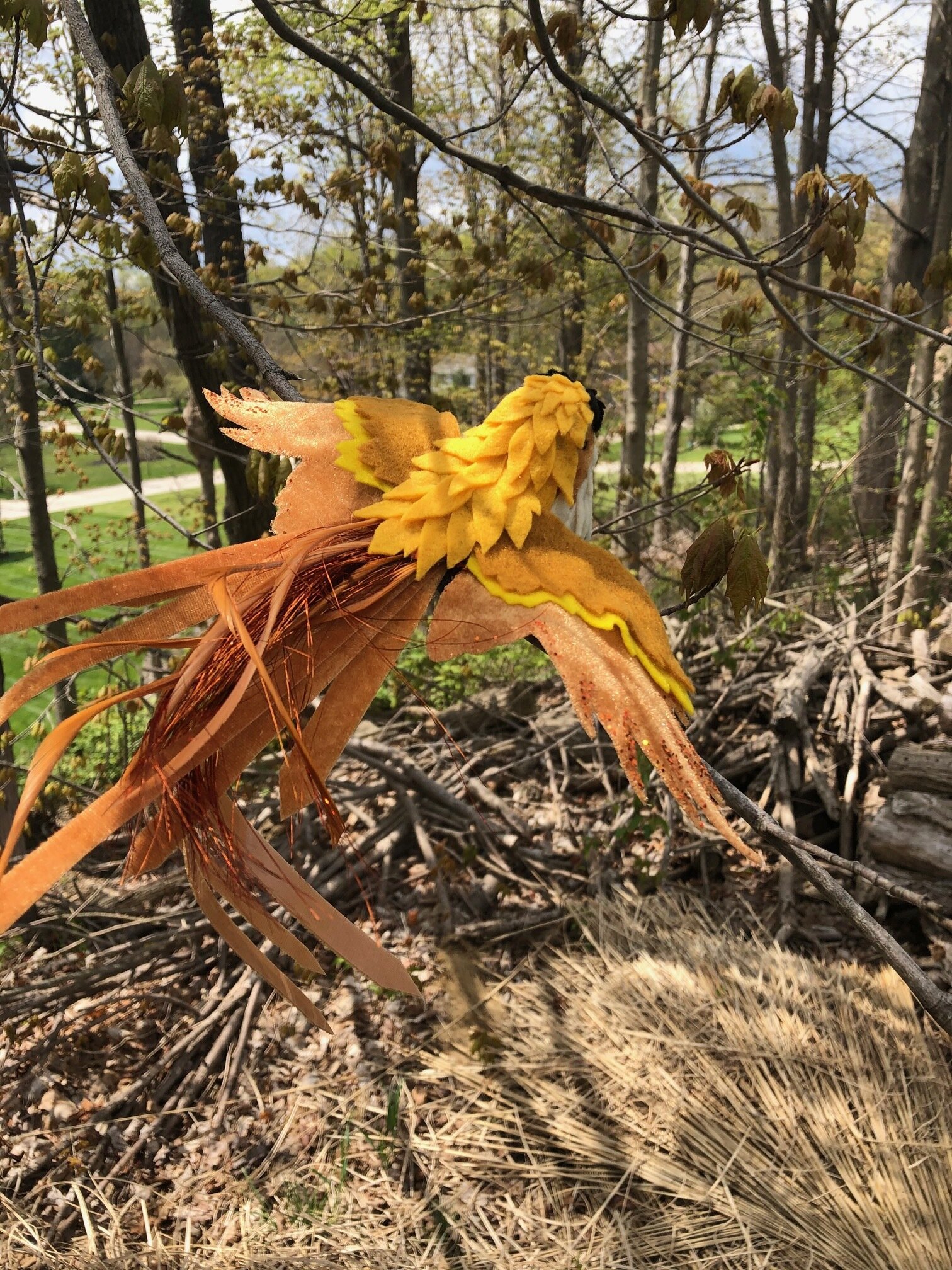
phoenix 2.jpeg

Cryptologic Name: Polifotia foinix
Planar Origin
: Olympia
Habitat: Mountainous regions
Diet: Carnivorous; eating small rodents and fish

Appearance & Morphology
The most well-known member of the polifotia genus (the firebirds), the phoenix is a large, crane-like bird with plumage in bright red, orange, and yellow. They have long, curved beaks that are golden in color and elaborate plumage cresting their heads.

Magical Abilities
The phoenix is venerated among the most magical creatures know to us, and has a number of magical abilities. Primary among them is their ability to self-combust; this skill is most well-known to be used by elderly phoenixes who have reached the end of their lifetimes and will immolate themselves to be reborn from the ashes of their previous body. This is a very limited scope of this power, however, as mature phoenixes can cause their wing and tail feathers to ignite at will. This does not scorch their feathers, but simply creates a wreath of flame that burns on their surface.

Beyond their iconic flames, these amazing birds have other magical properties. Their unique songs can be used to communicate, not only with other phoenixes, but with people and other sentient beings. They do not speak, in the conventional sense of the word, but they can communicate feelings and ideas through their songs. We believe there is some telepathic component but as yet cannot confirm this.

Phoenixes also have unique magic centered around their flight. When grasping an object with its talons, the weight of that object is significantly reduced, allowing them to fly carrying great burdens with ease.

Phoenix blood and phoenix feathers are both known to have incredible magical properties on their own. Their blood has incredible restorative properties and is often used in healing and cleansing potions, and their feathers are powerful magical catalysts, used in enhancing a wide variety of spells.

Behavior
The phoenix is an incredibly intelligent, curious, and long-lived bird, and as such is held as a very wise animal. Phoenixes are known to live in a single body for hundreds of years before being reborn, and it is believed that memories of their previous incarnations are regained over time in their new bodies.

Most phoenixes live solitary lives, only coming together to mate, which is a very infrequent occurrence. Given phoenixes’ long lifespans, they don’t reach sexual maturity until they are approximately 90-100 years old, and global populations are fairly small, so phoenix chicks are very few and far between.

Field Notes

  • While phoenixes are known to be highly intelligent, they are also generally rather distrusting of humanity, and with good reason given the uses of their feathers and blood as magical ingredients. On rare occasion, however, their curiosity aligns with our own and a phoenix will befriend a unique individual in whom it has taken an interest. This is the primary way in which we’ve been able to study these amazing creatures, as they tend to avoid us otherwise.


OOC Corner
The phoenix is a popular mythical creature with roots in a variety of different mythologies. The most well-known is the Greco-Roman tradition, but it also appears in Egyptian and Persian traditions, and has analogues in Hindu, Slavic, Chinese, and other cultures. The concept of a noble bird being reborn from the ashes is a pervasive concept in human cultures. Of course they are also widely used in popular culture.

Tammer

Michael MacWolff

tammer 2.jpeg

Cryptologic Name: Oryctolagus voluns
Planar Origin
: Mithyrea
Habitat: Temperate forests and prarieland
Diet: Herbivore; prefers wildflowers

Appearance/Morphology
The tammer is physiologically very similar to the common jackrabbit with a few distinctive additions: they have long tails with tufted ends, wings on their backs, and marsupial-like pouches on their bellies. Their colors and patterns vary but most commonly they are white, tan, black and/or brown. These creatures are quite agile both on land and in the air.

Magical Abilities
Tammers are one member of a trio of magical lagomorphs (rabbits) including the woltperinger and the jackalope. These three creatures are interrelated, but each species has distinct magical abilities. Tammers have the unique ability to locate and teleport to any individual on Earth by using a special item associated with that person, which cryptozoologists refer to as a ‘token.’ By placing this token in their pouch, they can travel instantly to their targets.

The token has rather specific qualifications to be useful for the tammer. The item must be a gift given by the intended target to another. The connection is most potent when the token is something given by the target to the sender, however it seems to work even if the individual sending the tammer was not the recipient of said gift.

It should be noted that tammers can also locate and travel to individuals with whom they’ve bonded without needing to use a token. As such they work well as delivery creatures for large families because each member of the family can bond with the tammer and thus the creature can travel freely between everyone without needing tokens.

A tammer’s teleportation ability is also unique in that it functions in a fundamentally different way than apparition; as such tammers can teleport to locations where most magical travel isn’t possible. There are barriers that can keep tammers out, but they are more sophisticated than most commonly used protection spells. This posed a particular problem in early wizarding prisons as random objects, weapons, and the like would occasionally appear in inmates’ cells without explanation.

Behavior
Highly intelligent compared to their nonmagical, and even their related magical rabbit species, the tammer can understand human speech when trained. Though their vocal chords do not allow them to speak. Many mages who have tammers as companions and/or delivery animals will train them to use bodily signals, such as the raising and lowering of ears, flexing of wings, etc. to communicate.

Field Notes

  • Before the implementation of the Owl Post system, tammers were much more widely used as delivery animals. They were very efficient at making deliveries, assuming you had something that would function as a token. Because the tammer teleports, rather than flying to their destination, they can transport a variety of objects that would be too large for owls. In addition, they are impossible to track by ordinary means as owls and other delivery birds are. The main drawback and reason that tammers are not as widely used today is because of the token qualifications required for their magic to work. For owls to make deliveries, all that is required is an address

  • The token is a unique concept in the magical world as the tammer seems to be the only creature we are aware of that uses an object with these qualifications as part of its magical abilities. In addition, the word ‘gift’ may be a bit misleading, as a tammer can generally use anything that was given by the recipient to another living being, even if it is not what we would conventionally consider a gift. Whatever magical properties exist in the giving of a token from one individual to another such that it triggers the tammer’s natural abilities is a subject that I truly believe deserves further research. My hypothesis is that there is some sort of empathic energy that is imbued in objects given as gifts, and that this energy is unique from person to person. This might also explain their ability to locate those with whom they have a connection even without the use of a token.

    We see evidence of this sort of empathic connection elsewhere in the magical world as in some rare cases witches and wizards possess the ability to sense and influence the emotions of others (I myself posess such abilities). In addition, there is the amustelid, who has very strong empathic powers and seems to form connections with other living beings that allow it to maintain its empathic connection over great distances. I would very much like to test this theory but have yet to come up with a good idea as to the method.


OOC Corner
The tammer is an unusual case. I originally encountered
this art by vidagr on DeviantArt. It is clearly based on griffkin and I’ve encountered at least one other artist who has done art of the same creature and uses the same name for them, but I can find no clear mythological or folklore basis for them. As far as I can tell vidagr is the original creator of these critters.

Nevermore

Michael MacWolff

IMG_5582.JPG

Cryptologic Name: Grimm corvus
Planar Origin
: Remnant
Habitat: Temperate forests, urban/suburban/rural areas
Diet: Omnivorous; subsist primarily through scavenging carrion as well as eating small seeds, nuts, and berries

Appearance & Morphology
The nevermore is the only known avian of the grimm genus. These creatures are similar in size and coloration to the common raven, with a distinctive mask of bone covering their face (a feature common amongst grimm) and two pairs of fiery red eyes. Each nevermore has markings on its mask which are unique to the individual and range in color from orange to violet but are most commonly red in hue.

Magical Abilities
The nevermore has minor prophetic powers, which appear to be limited to the foretelling of misfortune to those living beings around them. It is believed that their two sets of eyes are the source of their prophetic powers; the front pair of eyes seeing things as they are, and the rear pair seeing into the future. As with most prophetic arts, it’s unknown whether a person’s knowledge of impending misfortune can alter that person’s fate, or whether that knowledge ultimately leads them to the very predicament they have been warned about.

Behavior
Nevermores are highly intelligent, and as such will often try to warn those beings for whom they have forecast disaster by singing to them. They are most vigilant in their warnings when they have been domesticated and sense impending danger centered around their owners and others who they have developed an affection for. Unfortunately, nevermores have thus far not shown any capacity for human speech or other methods of precise communication, and therefore cannot be specific in their warnings; there’s no way to know whether the bird has foreseen a paper cut or your untimely demise. There is, however, a great deal of speculation as to the specific patterns in their songs corresponding to the nature and/or severity of events, but there is no conclusive evidence as yet to support that theory.

Field Notes

  • Despite the relative ease of training these birds, they are not a very popular creature to be kept as pets. This is most likely because people tend to be rather unnerved by both their appearance as well as their powers. Mages have been known to go mad from hearing the songs of the nevermore and becoming overly paranoid about the nature of the misfortunes they are fated to endure. They are also often blamed for such calamity purely by association, though it is widely accepted in the cryptozoological community that these birds are not the source of the bad luck, but simply harbingers of it. Nevertheless, most are more comfortable living in ignorant bliss of their future misfortune.

    • There have been some, on the other hand, who are on the opposite side of the fence, adoring their relationship with their nevermores, and actually training them to respond in the event of an emergency. According to Chairon Merivell, a respected collector of a variety of magical birds, he taught his nevermore to hit a “life alert” button (a muggle device used to aid those in danger/having a medical emergency) when the creature sensed mortal peril in his future. This training has yet to be proven as Merivell has yet to be involved in anything particularly life threatening.


OOC Corner

The nevermore is a type of Grimm, which are creatures from the animated series RWBY by Rooster Teeth Animation Studio. This is the second of this type of creature I’ve made, the other being the ursa.

Squirt

Michael MacWolff

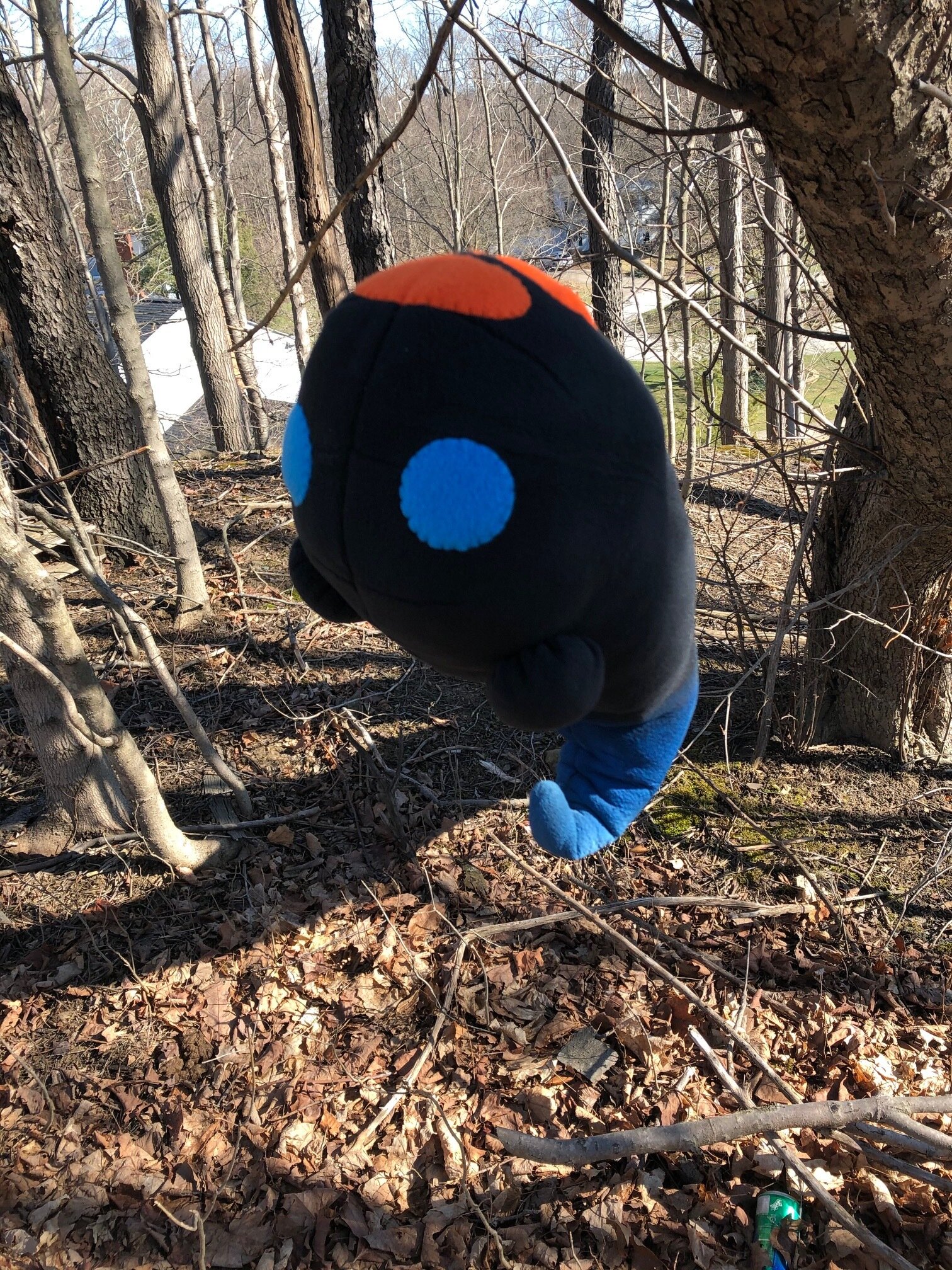
image3a.jpeg

Cryptologic Name: Caelinens fucus
Planar Origin
: Ggias
Habitat: Varied
Diet: Herbivore

Appearance/Morphology
Squirts are the smallest member of the caelinens genus, often referred to as “windbags.” These creatures have teardrop-shaped bodies with strong, flexible tails. Their skin is black and transitions to blue toward the tail tip. They generally have large blue eyes, bright orange markings on their heads, and two small appendages that resemble stubby arms.

Magical Abilities
Squirts have limited magical abilities on their own, beyond their ability to float effortlessly through the air. They do, however, produce a liquid secretion from ducts at the end of their tails that is a potent restorative liquid, often used in advanced healing potions, or diluted and ingested on its own to induce stimulate the healing of damaged tissues.

Behavior
Squirts are one of three species collectively referred to as “windbags,” and all three species live together in colonies and function as a unit. Squirts function as food gatherers and scouts, similar to drones n a beehive. They will use their flexible tails to gather fruits, flowers, and vegetation, eat it, and then produce their special liquid secretion (often referred to as “squirt extract”) to feed the other members of their colony. The second species, C. artifex, known as “gasfellas,” are the workers of the colony. They are larger and stronger, with developed appendages allowing them to build structures to support their colony, as well as defending it from harm. The final species, C. regno, also known as “scumbags,” are equivalent to queens in the hive analogy. Most colonies only have 2-3 scumbags and they will generally direct the other species in their daily tasks, as well as consuming any waste material to keep the colony tidy (hence where they earned their common name). This does seem to provide some sustenance for them but they also ingest the squirt’s extract along with the gasfellas. Scumbags are the only creatures that can reproduce, and will spawn members of all three species to suit the colony’s needs. While this suggests, from a biological standpoint, that they are all a single species, because they are magical in nature the rules are a touch fuzzier.

Field Notes

  • These strange creatures are a relatively recent discovery and as such I don’t have much experience with them yet, however I did discover a local colony and am working to develop a relationship with them. They are fairly intelligent creatures and while they cannot speak we’re starting to develop a rapport and I’m hoping to develop a way of communicating with them. There is a particular squirt who seems to have taken a liking to me when I bring offerings of food and will often follow me around whenever I go exploring in their forest.


OOC Corner

The squirt is a creature/enemy from the video game Bastion, by the awesome game studio Supergiant Games. This is the second creature I’ve made from one of their titles.